A guide for curious chocolate people

Beans and
origin guide

When you start reading chocolate wrappers, you quickly run into names like Criollo, Trinitario, or Forastero. Sometimes there are more specific ones like Porcelana, Chuncho, or Arriba. And then there are places: Madagascar, Ecuador, Peru. At first it feels like a lot of labels. But they are actually quite helpful. They don't tell you exactly how a chocolate will taste, but they give you a direction.

Cacao beans and origins guide illustration.

The genetic lineage

Cacao trees have been cultivated in Central and South America for thousands of years. Over time, different populations emerged, shaped by geography, climate, and human selection. The traditional labels Criollo, Forastero, and Trinitario are still widely used, and they offer a rough guide to flavour tendencies. But modern genetic research has revealed a more complex picture. Scientists now recognise ten major genetic groups, and the old categories sometimes overlap or fail to capture the full diversity of the species. I find the classic names helpful as tasting shorthand, even if they do not tell the whole scientific story.

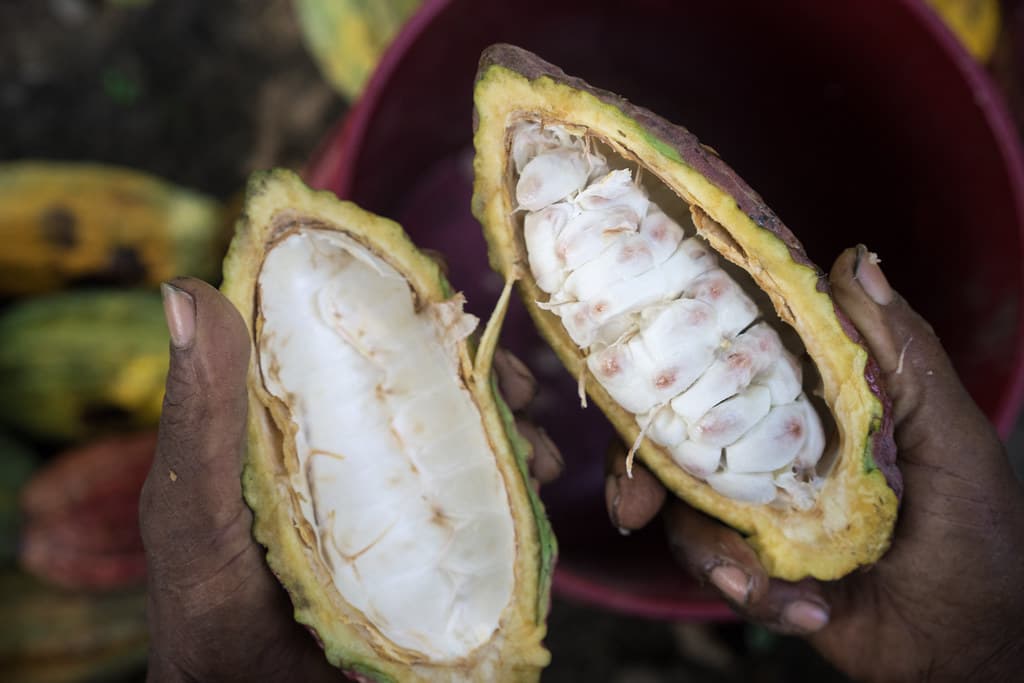
Criollo cacao reference image.

The Premium Bean

Criollo

Criollo is the bean people often talk about as the "premium" bean. In tasting terms, people usually associate it with lower bitterness, softer acidity and gentle aromas. And even within Criollo, there is no single flavour profile. Depending on the origin and processing, it can taste very different from one bar to another. Criollo is harder to cultivate and more sensitive to pests and climate, which makes it less common and generally more expensive.

DelicateLow Bitterness
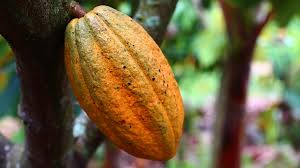
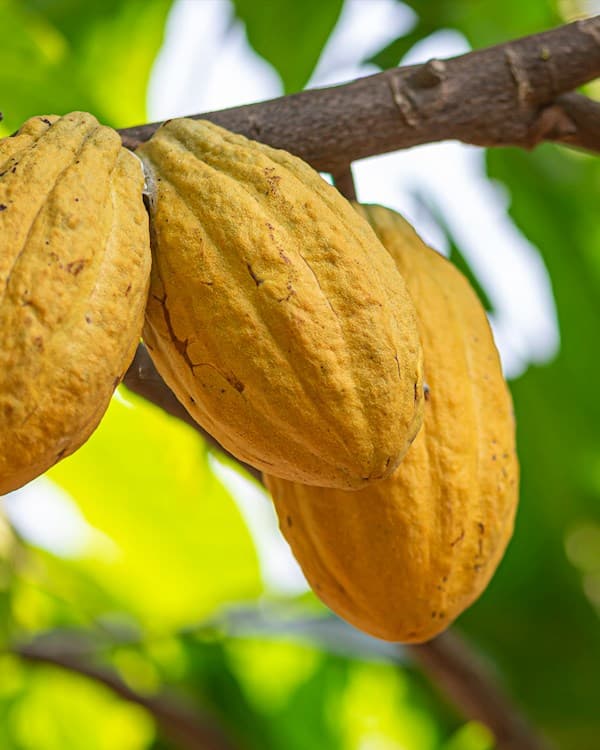
Forastero cacao reference image.

The Commercial Bean

Forastero

Forastero is the most widely grown cacao in the world and makes up the base of most commercial chocolate. Many mass-market bars use blends of different Forastero beans to get a consistent, reliable flavour. In terms of taste, it is often what people think of as "classic chocolate". Stronger, more bitter, less acidic. Personally, I often find these profiles a bit less interesting or less edgy compared to some of the more nuanced beans. But this is not a rule. With good fermentation and careful processing, Forastero can be surprisingly complex. There are definitely bars where it really stands out.

Cocoa-ForwardRobust
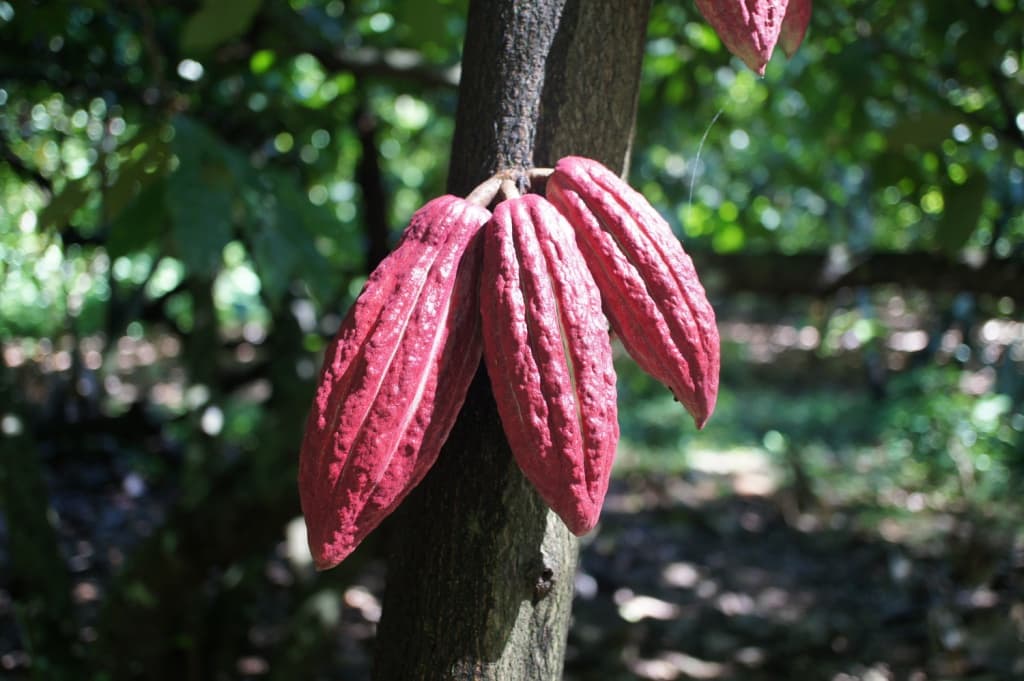
Trinitario cacao reference image.

The Crossbreed

Trinitario

Trinitario originated from natural crossbreeding between Criollo and Forastero. This happened after a disease outbreak in Trinidad in the 18th century, when farmers replanted Criollo plantations with the more robust Forastero trees. Trinitario is not a single, clearly defined flavour profile. It is a broad category, and the actual taste depends a lot on origin and processing. Some bars can be bright and fruity, others more nutty or bitter.

BalancedComplex

A few more names you will see on wrappers

Once you move past the big three, more specific names start showing up. Some are local types, some are famous fine-flavour names, and some are really better understood as reputations than clean scientific categories.

A Rare Criollo Type

Porcelana

Porcelana is one of those names that comes with a bit of awe around it. It is usually described as a prized Venezuelan Criollo type and is often talked about as one of the rarest, most premium, and most expensive cacaos. People usually associate it with pale beans, a softer profile, and a creamy, gentle kind of complexity. I treat it as a strong clue that a bar might be elegant rather than loud, but still not as a guarantee.

RarePremium

A Native Peruvian Type

Chuncho

Chuncho is a native Peruvian cacao from Cusco that I find especially exciting. In Peruvian cacao literature it often gets discussed alongside native Criollo cacaos, but again, the genetics are not as neat as wrapper language makes them sound. What matters for me is that Chuncho often shows up with really distinctive aroma: fruit, spice, and a nice lively acidity.

FruityBright

An Ecuadorian Fine-Flavour Name

Arriba

Arriba is another name worth knowing. Strictly speaking it is not a Criollo subtype. It is the famous Ecuadorian Arriba Nacional tradition, usually associated with fine-flavour cacao and floral, fragrant bars. So when you see Arriba on a wrapper, I read it less as a simple bean label and more as a signal for a specific Ecuadorian flavour reputation.

FloralFragrant
20°

The Cacao Belt

20° North
20° South

Post-Harvest Matters

Even beautiful cacao can taste flat, harsh, or sour if fermentation and drying are poorly done.

Where cacao grows

Why cacao likes the tropics

Cacao is surprisingly picky. It likes steady warmth, high humidity, regular rainfall, and some protection from harsh sun and wind. That is why it grows mainly in the narrow belt around the equator. When people talk about origin, they are really talking about a bundle of conditions: climate, soil, altitude, nearby vegetation, and farming decisions.

And then the work continues after harvest. Fermentation and drying are not tiny technical details. They are part of why one bar tastes clean, fruity, and expressive while another tastes dull, overly acidic, or rough.

After that, the beans still have a long way to go before they become chocolate. They are roasted, cracked, and winnowed so the shells come off and the nibs stay. Then the nibs are ground into cocoa mass, refined until the texture is smooth enough, and then conched. Conching is the long mixing and aerating step that helps the flavour settle and the whole thing come together. Sometimes makers even advertise how long they conch for. To me, simple grinding on its own is usually not the interesting differentiator once it has been done long enough. What matters more is whether the bar ends up feeling harsh, raw, closed, or nicely integrated.

01

Steady Warmth

Cacao likes warm tropical weather and does not enjoy big swings in temperature. It grows best where heat is steady rather than extreme.

02

Rain And Humidity

Rainfall and humidity matter a lot. Too little water stresses the tree, but poor drainage and too much wetness create their own problems.

03

Shade And Shelter

Cacao evolved as an understory tree, so shade and shelter are part of the picture too. Harsh sun and wind are not what it wants.

K

The fun part is that these clues do not always behave the way you expect.

At the beginning, I was quite excited about beans and origins. And yes, some of them really do have distinct, recognizable profiles. I remember falling in love with chocolate from Madagascar early on. But over time, my perspective shifted a bit. Especially when beans come from small farms, they can be incredibly unique and interesting. Two bars with the same origin or even the same bean type can taste completely different. It is often less about the label and more about how the beans were grown, fermented, and processed.

And there is something that is easy to overlook and hard to know before opening a bar: storage. Chocolate is sensitive. Heat, light, and time all matter. If a bar has been stored too warm or for too long, the flavours can become flat or dull. And even with perfect storage, the taste vanishes with time. That's why I check the manufacturing date if it is listed or at least the expiry date. If there are only a few months left, I usually skip it.